
Rajiv Gauba Takes Charge: Key Ministries Shift Under His Oversight in NITI Aayog Restructure
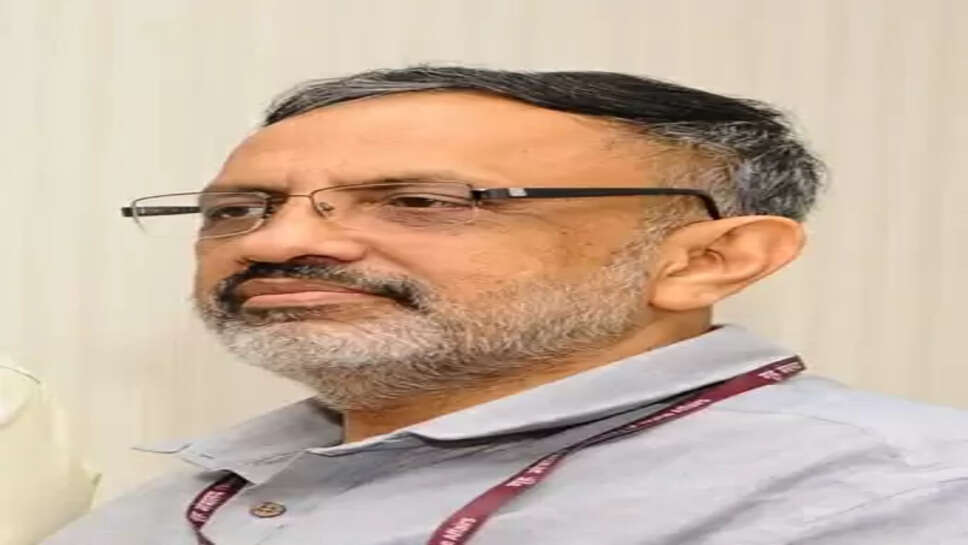
In a significant structural shift within the country’s policy-making ecosystem, the NITI Aayog has reallocated critical ministerial portfolios—particularly those related to security, infrastructure, and energy—under the strategic oversight of Cabinet Secretary Rajiv Gauba. The move comes weeks after Gauba was officially inducted into a more direct advisory and coordination role within the central government’s policy think tank, signaling a renewed focus on high-level execution and strategic consolidation.
While NITI Aayog traditionally functions as a policy and planning body with inputs from sectoral experts and members, this latest reshuffle reflects a growing trend of centralizing key national functions under experienced bureaucrats known for administrative acumen and crisis management.
A Quiet but Powerful Entry
Rajiv Gauba, a 1982-batch IAS officer of the Jharkhand cadre, has long been regarded as one of the most influential civil servants in the Indian administrative machinery. Known for his instrumental role in the abrogation of Article 370 during his tenure as Union Home Secretary and for leading the COVID-19 containment strategy during the pandemic, Gauba's expertise in governance and coordination is widely respected across party lines and ministries.
His inclusion into NITI Aayog in an expanded capacity has not been marked by fanfare, but rather by a steady restructuring of responsibilities. Ministries that deal with core national interests—such as energy security, national infrastructure development, strategic transport corridors, and internal security—have now been moved under his strategic review and coordination lens.
Officials close to the matter describe this as a “systems-level alignment” designed to bridge the gap between planning and real-time execution, ensuring that complex national priorities are handled with greater coordination, especially across overlapping sectors.
Strategic Ministries Shifted Under His Supervision
The restructured clusters now operating under Gauba's policy orbit include:
-
Ministry of Power
-
Ministry of New and Renewable Energy
-
Ministry of Road Transport and Highways
-
Ministry of Railways
-
Ministry of Home Affairs (select verticals)
-
Ministry of Petroleum and Natural Gas
-
Ministry of Civil Aviation (project-specific inputs)
These ministries were earlier supervised by different verticals within NITI Aayog’s internal working groups. The consolidation now places their long-term policy visioning, inter-ministerial alignment, and target delivery monitoring directly under a centralized framework where Gauba plays a pivotal integrative role.
This allows for better synchronization between infrastructure rollout, energy requirements, and national security parameters—a triangular dynamic often at the heart of India’s long-term developmental roadmap.
What This Means for Policy Execution
The shift represents a broader trend toward operational efficiency in India’s bureaucratic model. Policy planning often falters at the intersection of jurisdictional overlaps and implementation delays. By appointing a figure with cross-ministerial experience and a deep understanding of India’s federal machinery, the government aims to minimize friction and accelerate big-ticket projects.
Under Gauba’s leadership, officials say the focus will now be more on “outcome-linked planning”, rather than traditional “paper-based policy framing.” This includes monthly performance reviews, geo-spatial monitoring of infrastructure projects, cross-sector energy demand-supply modeling, and improved data analytics to anticipate bottlenecks before they escalate.
This model is already showing early signs of institutional transition. Key meetings between the ministries of Power, Railways, and Highways are now being co-chaired or facilitated through the Cabinet Secretariat rather than through siloed inter-ministerial task forces.
Energy and Security: The Strategic Lens
The inclusion of energy ministries under Gauba’s watch signals a sharp recalibration in how India wants to balance its economic growth with energy independence. With global fossil fuel markets in flux and renewable energy targets becoming more ambitious by the day, the Centre appears to be taking a more command-based approach toward national energy planning.
Simultaneously, select internal security verticals from the Ministry of Home Affairs have been brought into NITI Aayog’s high-level coordination framework. This includes digital infrastructure protection, border connectivity projects, and critical logistics networks—areas that require close integration with civil and defense planning units.
Experts believe this reflects a growing understanding that energy resilience and infrastructure security are deeply interlinked with national sovereignty. By placing these portfolios in proximity to Gauba’s administrative view, the government is preparing to take swifter policy decisions in times of geopolitical or environmental turbulence.
A New Power Centre Within NITI Aayog?
Though NITI Aayog remains a multi-member body led by the Prime Minister as Chairperson and supported by a Vice-Chairman, the internal power dynamics may see subtle shifts. Gauba, while not replacing any existing senior officials, is being seen as the government’s “anchor within the Aayog,” especially for projects with strategic or sensitive ramifications.
This development may redefine how policy priorities are structured. For instance, infrastructure projects connected to border areas, energy grids linked to national security installations, or high-speed transport systems serving critical corridors could now be fast-tracked under Gauba’s direct supervision.
The role, insiders suggest, is not just about oversight, but about breaking silos, creating institutional interoperability, and pushing reforms at the intersection of governance and logistics.
The Political Calculus
While this move appears administrative on the surface, its implications are inherently political. With the 2029 general elections on the horizon and India’s global ambitions rising, the ruling government is keen to avoid bureaucratic missteps that could derail key national projects.
By placing Rajiv Gauba in a central role at NITI Aayog, the political establishment seems to be betting on a tested hand to streamline governance at a time when both domestic and international eyes are watching India’s development curve.
Further, Gauba’s relatively non-partisan image and his professional reputation among state governments may help the Centre better coordinate with states on cooperative federalism issues, especially those involving land acquisition, regulatory clearance, and project implementation.
Challenges Ahead
Despite the strategic advantage, the restructuring is not without challenges. Centralizing oversight in one individual, no matter how experienced, can create dependency bottlenecks. Questions may also arise about institutional autonomy within NITI Aayog and the influence of the Cabinet Secretariat in shaping independent policy frameworks.
Moreover, with overlapping jurisdictions, coordination with state governments and various regulatory agencies must be delicately managed to avoid friction. Gauba’s success will largely depend on how he balances swift action with consensus-building—something that requires both administrative tact and political neutrality.
Looking Forward
As India navigates a decade defined by rapid technological change, global economic volatility, and pressing climate demands, its internal governance structures must evolve. The induction of Rajiv Gauba into a key decision-making and coordinating role within NITI Aayog is a step in that direction.
By entrusting him with ministries that lie at the heart of India’s development engine—security, energy, and infrastructure—the government is signaling that policy is no longer just about ideas, but about delivery, integration, and impact.
The next few months will reveal whether this administrative experiment leads to faster project clearances, better coordination, and more cohesive policy outcomes. For now, it marks a clear departure from business-as-usual—and a decisive move toward governance with sharper execution at its core.